


With climate change threatening extraordinary impacts on our planet Earth, the role of the designer has become one of the most critical in the 21st century.
Our Mission
To teach regenerative design and ecological principles that align human aspirations with nature’s systems, empowering students to create resilient, responsible solutions through integrated education.
Our Vision
To cultivate a community of visionary thinkers who design with nature and challenge convention.
History of how the Ecosa Institute was founded
The Ecosa Institute was founded on the belief that a new design philosophy informed by the natural world is critical to the future survival of our species. The design of human environments has always had a transformative impact on human societies and the natural systems on which we depend; the environments we create change the way our societies perceive the world.
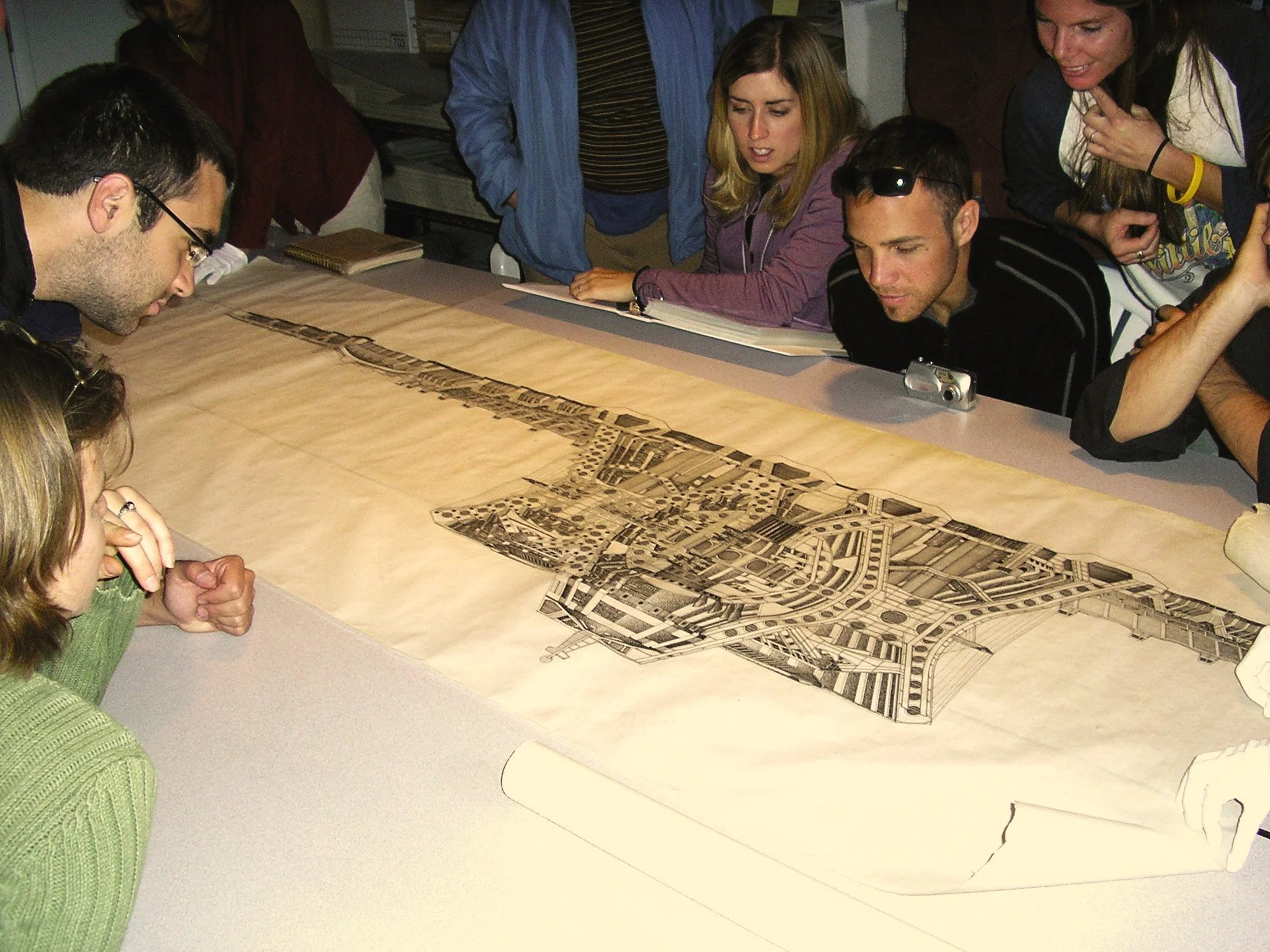
Ecosa was started in 1996 by renowned architect Tony Brown whose career has been at the forefront of responsible architecture and sustainable design for over 40 years. In Brown’s early career, he worked alongside his mentor, Paolo Soleri. Soleri was an Italian-American architect and urban planner. He established the educational Cosanti Foundation and Arcosanti along with being a National Design Award recipient in 2006. Based on his time at Arcosanti and his travels around the world, he later began to foster a new type of design education. Brown created a semester long design certificate program for college-age and older individuals. This program has impacted over 400 change-makers over the past few decades.
“It became clear,” said Brown, “that only a design program that is interactive, multi-disciplinary, and encourages complex systems thinking, can bring any understanding to the subject of ecological design.”
In 2025, the Ecosa Institute started its next chapter. After almost 30-years, Brown decided to pass the baton to the next generation of leadership. He named alumna and fellow architect Cynthia Fishman as his successor, both in terms of managing the institute as the Executive Director and guiding its educational offerings as Director of Education. Fishman has always been passionate about environmental design and knew from a young age that she wanted to focus on being part of the solution rather than the problem. She found she could best do that through architecture, biomimicry, and education.
Both she and Brown decided to move Ecosa’s headquarters to Denver, Colorado to start this next chapter. This move marked more than a change in geography; it represented a transformation in possibility. Denver’s vibrant design culture, ecological awareness, and collaborative innovation made it the perfect home for Ecosa’s evolution as a national leader in regenerative design education. Ecoca’s educational offerings also expanded to include high school students, middle school students, and the community at large.
History of How Ecosa’s Logo was Created
Philosophy
The Ecosa Institute promotes the practice of ecological design—a design philosophy that recognizes the interconnectedness of human activities and the natural environment. The Institute seeks to provide an educational framework where design solutions not only meet human needs, but also restore ecosystems, minimize environmental impact, and create regenerative systems.
Key elements of the Ecosa Institute’s philosophy include:
Sustainability: Creating design solutions that can sustain themselves over the long term without depleting natural resources.
Regenerative Design: Moving beyond sustainability to design systems that actively restore and regenerate the environment.
Systems Thinking: Viewing design as part of a larger ecological and social system, where each component influences the whole.
Interdisciplinary Approach: Incorporating architecture, urban planning, landscape design, and environmental science into a holistic approach to design.

Influence & Impact
The Ecosa Institute has played a significant role in advancing ecological design education in the U.S., particularly by promoting a systems-thinking approach to design. It has been a leader in integrating architecture and ecology, helping designers and architects consider not just how buildings are made, but how they affect the ecosystems around them. The institute has influenced a generation of designers to think beyond the traditional limits of architecture and consider the larger environmental context.
Ecosa and the Broader Ecological Design Movement
The work of the Ecosa Institute aligns with the broader movement toward regenerative design, which seeks to create systems that restore, renew, and revitalize their own sources of energy and materials. This approach is increasingly seen as a necessary evolution from sustainable design, which focuses on minimizing harm, to regenerative systems, which aim to leave the environment better than it was before. The institute’s philosophy and curriculum reflect these trends and contribute to global discussions on how to design for a more resilient and regenerative future.
Key Contributions
Educational Innovation: Ecosa's interdisciplinary curriculum has influenced other educational institutions to adopt similar holistic design approaches that integrate environmental, social, and economic concerns.
Sustainable Architecture and Green Building: The institute’s focus on green building practices has contributed to the growing awareness of the environmental impact of construction and the importance of energy-efficient and low-impact building techniques.
Ecological Design Advocacy: Through its programs and outreach, Ecosa has become a prominent advocate for ecological design, influencing both professionals and the general public to think about design as a tool for environmental stewardship.
Mental Health in the Age of Climate Change
Now more than ever, we are experiencing profound psychological responses, collectively known as eco-emotions or eco-distress in response to the global climate crisis and environmental degradation. Being bombarded by news headlines about the climate crisis can leave us feeling hopeless and helpless about the future. But it doesn’t have to be that way! The Ecosa Institute can help. We can be your community. Join us as we work to combat these feelings and learn how to adapt to our changing world. The future is not written in stone.